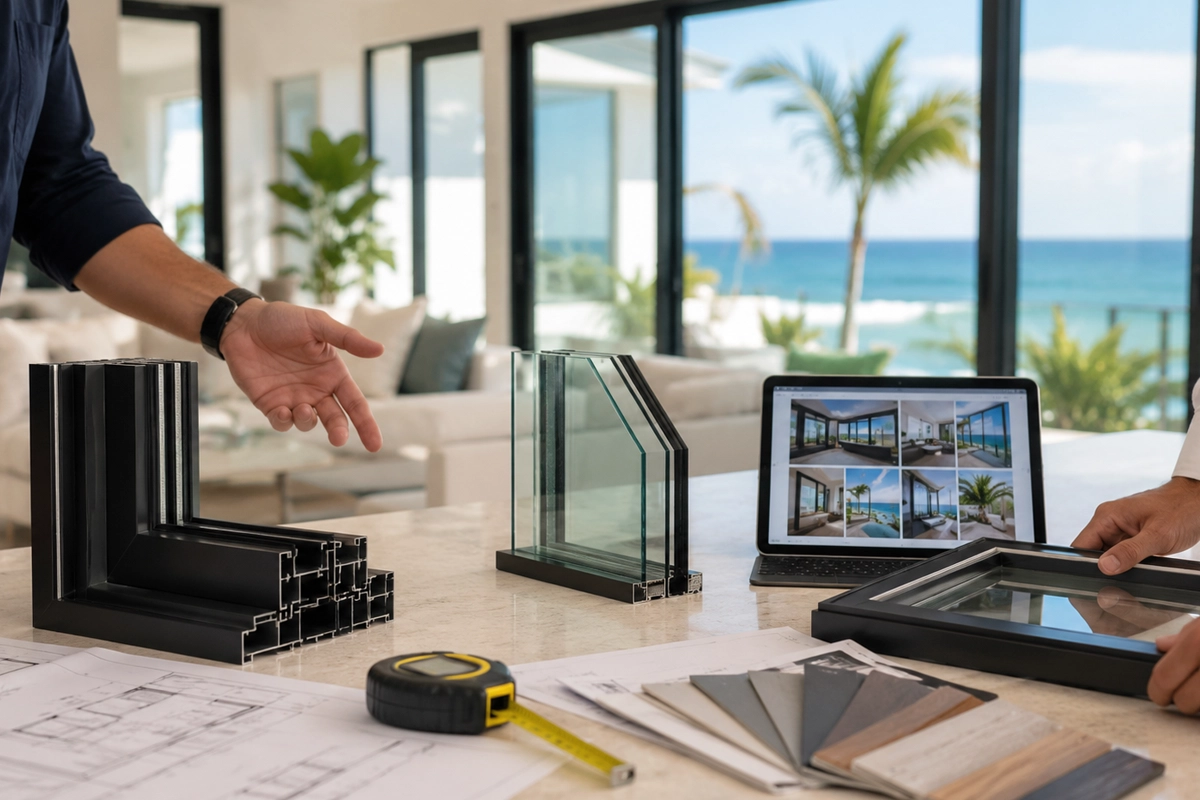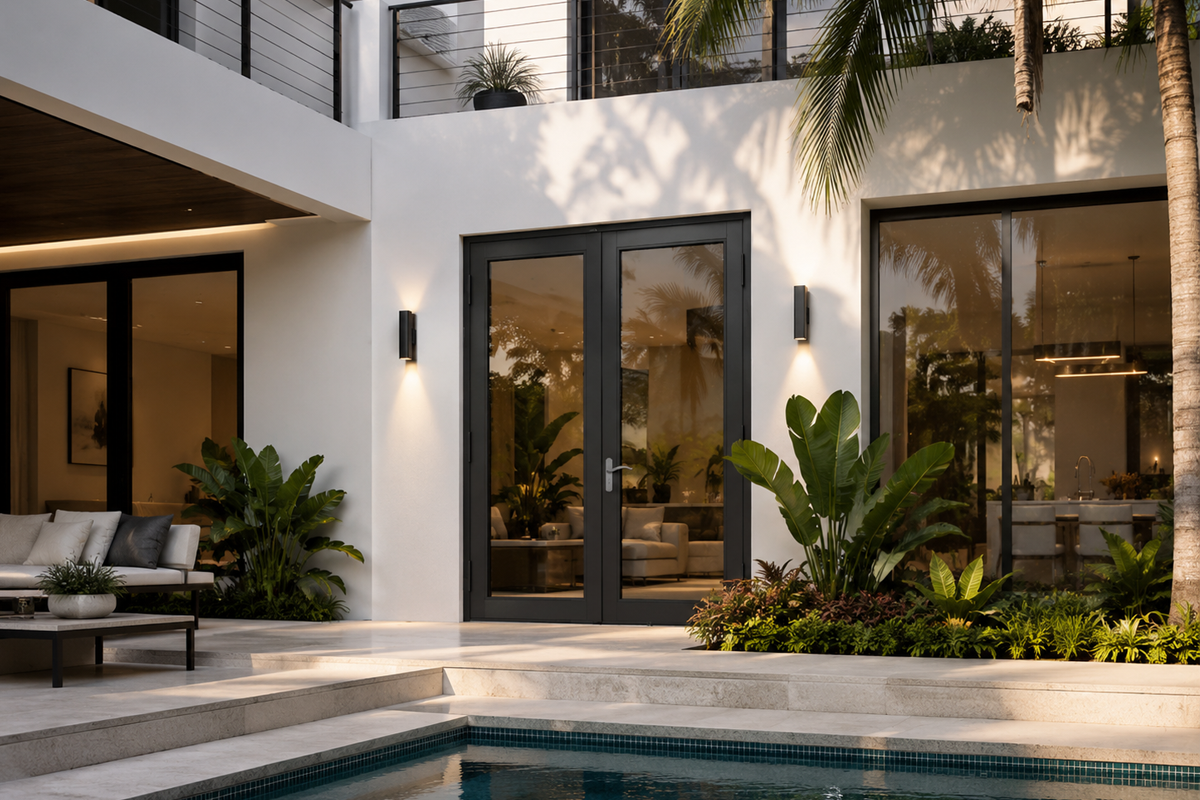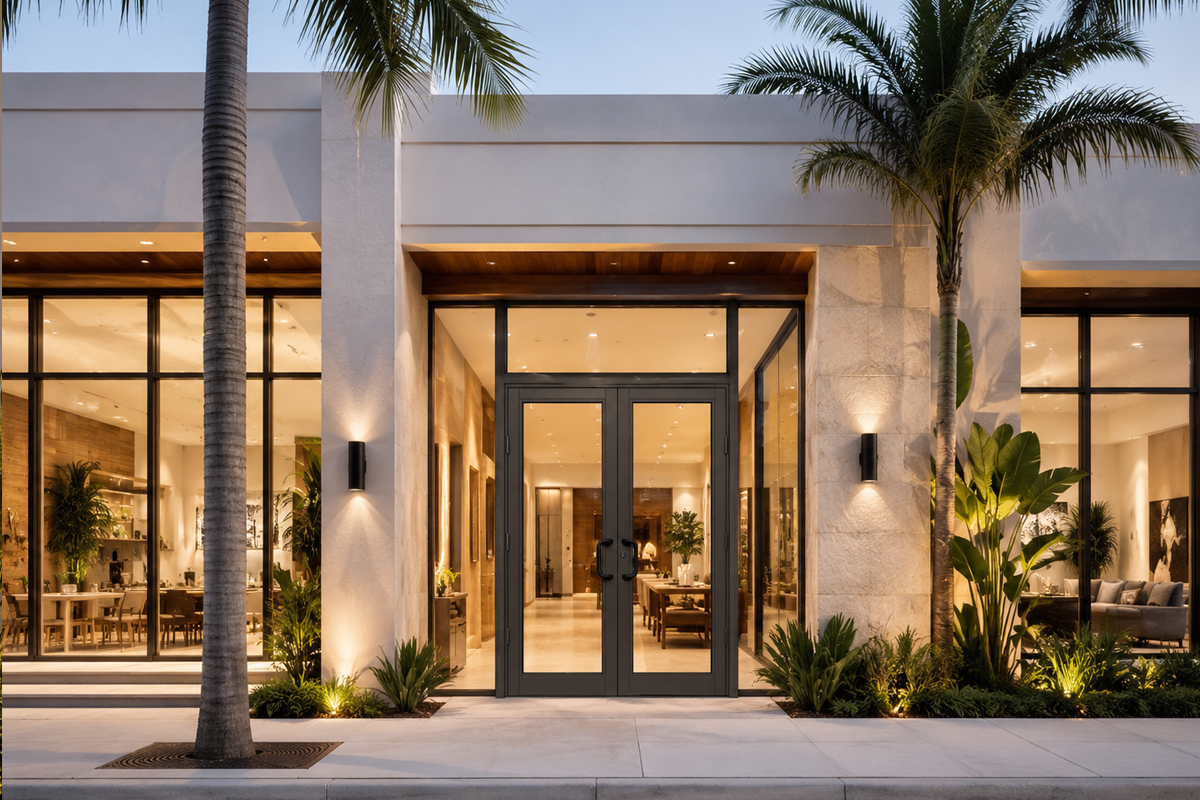
For many businesses, the storefront is the first impression customers have before they ever walk inside. Clean glass, strong entry systems, clear visibility, and a professional exterior can make a commercial property feel more inviting, secure, and trustworthy.
In Florida, commercial glass planning is not only about appearance. Business owners also need to think about storm exposure, security, durability, energy performance, accessibility, daily traffic, maintenance, and local requirements.
Whether you are opening a new retail space, upgrading an office entrance, replacing damaged glass, improving a storefront, or planning a larger commercial buildout, the right glass system can make a major difference in how the property looks and performs.
This guide explains what Florida business owners, property managers, builders, and commercial tenants should consider when planning commercial glass and storefront systems.
Why commercial glass matters
Commercial glass affects more than the exterior look of a business. It influences how customers see the company, how much natural light enters the space, how secure the property feels, and how well the building handles everyday use.
A well-planned commercial glass system can help with:
- Customer visibility
- Natural light
- Exterior presentation
- Business branding
- Security
- Storm readiness
- Entryway performance
- Interior comfort
- Long-term durability
- Property value
For customer-facing businesses, storefront glass can be one of the most important design features of the building.
Start with the purpose of the space
Before choosing a storefront or commercial glass system, it is important to understand how the space is used. A retail store has different needs than a medical office, restaurant, showroom, warehouse office, or professional service location.
Ask questions such as:
- Does the business need maximum visibility from the street?
- Is privacy important?
- Will customers use the entrance all day?
- Is the glass exposed to strong sun?
- Is the property in a high-traffic area?
- Does the business need display windows?
- Is security a major concern?
- Are there hurricane protection requirements?
- Will signage or branding be placed on the glass?
- Does the space need a modern, premium appearance?
The answers help determine the right type of glass, frame system, door hardware, tint, and layout.
Storefront systems and first impressions
A storefront system typically includes glass panels, framing, doors, hardware, and surrounding components that create the front face of a commercial space. For many businesses, this is the most visible part of the property.
A clean storefront can make a business look more modern, open, and professional. An outdated or damaged storefront can have the opposite effect, even if the business itself is excellent.
Customers often judge a business quickly. If the entrance looks neglected, dark, difficult to access, or poorly maintained, it can affect trust. On the other hand, a bright and well-designed storefront can help create confidence before a customer steps inside.
Good storefront planning should balance appearance with performance.
Visibility and natural light
One of the main reasons businesses use commercial glass is visibility. Retailers want customers to see products. Restaurants may want the space to feel open and active. Showrooms need light and visibility to display their work. Offices may want a clean and welcoming entry.
Natural light can also make the interior feel better for employees and customers. A brighter space can feel more inviting and professional.
However, visibility should be planned carefully. Too much clear glass in the wrong location may create glare, heat, or privacy concerns. Some businesses may need tinted, frosted, patterned, or partially obscured glass depending on the use of the space.
The goal is not simply to add more glass. The goal is to choose the right glass for the way the business operates.
Security considerations
Security is one of the most important factors in commercial glass planning. Businesses need to protect employees, customers, inventory, equipment, and the property itself.
Commercial glass systems can include stronger glass options, durable framing, improved locking hardware, and door systems designed for frequent use.
Security planning may depend on:
- Business type
- Hours of operation
- Inventory value
- Location
- Visibility from the street
- Lighting
- Existing alarm systems
- Entry points
- Glass size and placement
Impact-rated or laminated glass may help improve resistance compared with standard glass, depending on the system selected. For many Florida businesses, combining storm protection and security in one upgrade can make practical sense.
Hurricane and storm exposure
Florida businesses must consider severe weather. Wind, rain, debris, and pressure changes can affect commercial openings, especially large storefront glass areas.
Commercial glass and storefront systems should be selected with the property location and exposure in mind. A business near the coast may have different concerns than one farther inland. Large glass openings, corner locations, and exposed elevations may require extra attention.
Business owners should ask whether the selected system is appropriate for the property and whether the products have the necessary approvals for the intended use.
Storm planning is especially important for:
- Storefronts
- Office entrances
- Restaurants
- Showrooms
- Retail spaces
- Ground-floor commercial units
- Buildings with large glass walls
- Coastal or high-exposure properties
A professional evaluation can help determine what level of protection is appropriate.
Impact glass for commercial properties
Impact glass can be a strong option for many commercial properties because it supports both storm readiness and security. Unlike temporary protection, impact glass is always in place.
For businesses, this can be especially valuable. A business owner may not always have time to install panels or deploy shutters before a storm. Employees may not be available. The property may be closed. A storm may strengthen quickly.
Permanent impact-rated systems reduce the amount of last-minute preparation needed for glass openings.
Impact glass may be used in storefront systems, doors, sidelites, fixed glass panels, and other commercial applications depending on the project.
Entry doors and daily traffic
Commercial entry doors work harder than residential doors. They may open and close hundreds of times a day depending on the business. That means durability, hardware quality, alignment, and proper installation are essential.
A commercial entry system should feel smooth, safe, and reliable. A poorly operating door can frustrate customers, create safety concerns, and make the business look unprofessional.
When planning commercial doors, consider:
- Expected daily traffic
- Door swing or sliding operation
- Accessibility
- Locking hardware
- Panic hardware if required
- Door closers
- Handles and pulls
- Glass type
- Frame strength
- Weather exposure
- Maintenance needs
The door should match the business function. A restaurant, medical office, gym, salon, retail shop, and professional office may all need different entry solutions.
Storefront appearance and branding
Commercial glass can support the brand of a business. The shape of the storefront, door style, frame color, glass clarity, hardware, and signage all contribute to the overall look.
A premium showroom may want a clean modern glass entrance. A retail store may prioritize large display windows. A professional office may want a more private but polished entry. A restaurant may want visibility while still controlling heat and glare.
Storefront planning should consider:
- Frame finish
- Glass tint
- Door style
- Signage placement
- Interior visibility
- Nighttime appearance
- Exterior lighting
- Customer flow
- Display areas
- Brand personality
The right glass system can make the business look more established and intentional.
Energy performance and comfort
Commercial glass affects interior comfort. In Florida, sun exposure and heat can make a major difference, especially for storefronts facing east, west, or south.
Large glass areas can bring in natural light, but they can also create heat gain and glare if not planned properly.
Glass options may help improve comfort by reducing heat, glare, or UV exposure. The right solution depends on the building orientation, business type, air conditioning performance, and how the space is used.
Comfort matters for both customers and employees. A space that is too hot, too bright, or uncomfortable near the glass can affect the customer experience.
Privacy and interior layout
Not every commercial space needs maximum transparency. Some businesses need privacy for clients, patients, employees, inventory, or operations.
Privacy can be managed through:
- Frosted glass
- Tinted glass
- Decorative film
- Interior partitions
- Partial-height glass
- Strategic layout
- Window coverings
- Glass placement
Privacy should be considered early in the design process. It is easier to plan the right glass from the beginning than to correct privacy issues after installation.
Maintenance and durability
Commercial glass systems should be durable enough for the daily demands of the business. A storefront that looks great on day one should also be practical to maintain.
Maintenance considerations include:
- Cleaning access
- Hardware durability
- Door adjustment
- Seal condition
- Frame finish
- Exposure to salt air or moisture
- Customer traffic
- Impact from carts, equipment, or deliveries
- Long-term replacement needs
Businesses should choose products and installation methods that fit the property’s real-world conditions.
Repair vs replacement
Not every commercial glass issue requires a full replacement, but some situations are better solved with an upgrade.
Repair may make sense when:
- Damage is minor
- The frame system is in good condition
- The glass replacement matches the existing system
- The issue is isolated
Replacement may be better when:
- The storefront is outdated
- Multiple glass panels are damaged
- Frames are worn, corroded, or leaking
- Doors no longer operate properly
- Security needs have changed
- The business wants a new appearance
- The system does not meet current project goals
- Storm protection is a priority
A professional inspection can help determine whether repair or replacement is the smarter investment.
Permits and code considerations
Commercial glass projects may require permits, product documentation, inspections, or coordination with building management. Requirements can vary depending on the location, property type, project scope, and local rules.
This is especially important for exterior openings, storefront changes, structural conditions, impact-rated products, and commercial entry systems.
Business owners should ask:
- Is a permit required?
- What documentation is needed?
- Are product approvals required?
- Will inspections be needed?
- Are there building management rules?
- Are there accessibility considerations?
- Are there landlord or property owner approvals?
A clear process helps avoid delays and keeps the project organized.
Landlord, tenant, and property manager coordination
Many commercial glass projects involve more than one decision maker. A tenant may need landlord approval. A property manager may need building specifications. A business owner may need to coordinate work hours to avoid disrupting customers.
Before starting, confirm:
- Who approves the work?
- Who is responsible for payment?
- Are there building standards?
- Are there required vendors?
- When can work be performed?
- Are there restrictions on noise or access?
- Will the business remain open during installation?
- Are insurance documents required from contractors?
Good coordination can prevent delays and confusion.
Minimizing business disruption
Commercial projects need to be planned around operations. A store, office, or restaurant may not be able to close for long periods.
Project planning should consider:
- Installation schedule
- Customer access
- Safety barriers
- Work hours
- Deliveries
- Noise
- Cleanup
- Temporary protection
- Weather delays
- Inspection timing
The goal is to complete the work safely while minimizing disruption to the business.
Questions to ask before planning commercial glass
Before starting a commercial glass or storefront project, ask:
- What is the main goal: appearance, protection, security, visibility, or all of these?
- Is the current glass damaged, outdated, or underperforming?
- Does the business need more visibility or more privacy?
- How much customer traffic does the entrance receive?
- Is the property exposed to strong sun, wind, rain, or salt air?
- Are impact-rated products needed?
- Will permits or approvals be required?
- Does the landlord or property manager need to approve the work?
- Can installation happen during business hours?
- What type of maintenance will be required?
These questions help define the project before product selection begins.
Final thoughts
Commercial glass and storefront systems are an important investment for Florida businesses. They affect first impressions, visibility, security, storm readiness, comfort, and daily operations.
The best solution is not always the most basic glass replacement. A strong commercial glass plan should consider how the business operates, how customers enter the space, how the property is exposed to weather, and how the exterior should represent the brand.
AA Glass & Windows helps Florida business owners, property managers, and project teams plan commercial glass, storefront systems, impact-rated openings, and glass upgrades designed for performance and presentation.
If your business is planning a storefront upgrade, commercial glass replacement, or impact-rated glass project, our team can help you review the right options.